
By Jessica Rosales G. PhD
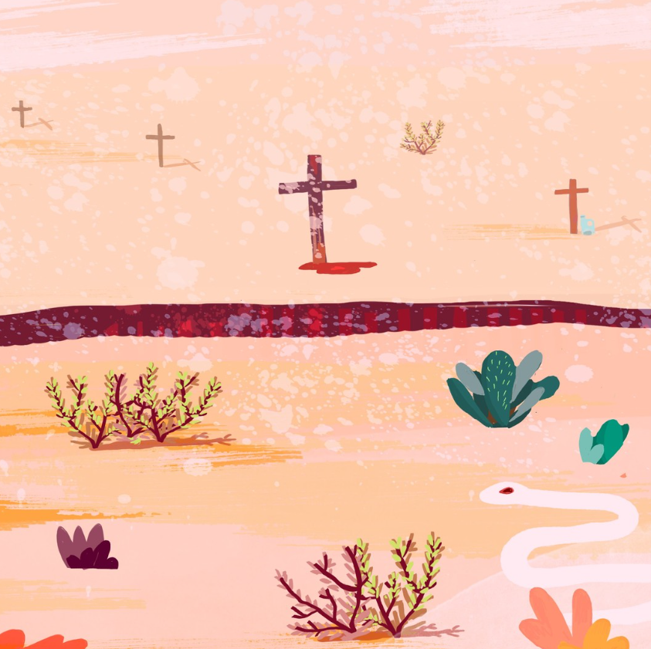
Within our Neocalvinist worldview, art and emotions hold a fundamental place in the holistic flourishing of humanity and in revealing the beauty of God’s Kingdom in the midst of the world. Art allows us to contemplate and express both the beauty of creation and the pain of a reality marked by the Fall, while emotions enable us to experience that reality and to connect intimately with those around us.
This understanding finds a sound foundation in the thought of the Reformed philosopher Herman Dooyeweerd, who identified fifteen spheres, including the aesthetic and sensitive spheres, as model aspects of reality. Far from being secondary elements of human life, both reveal essential dimensions of creation and invite us to live more fully, creatively, and relationally.
With this conviction, we share the article and poems that follow. They were originally written in English, with a bilingual audience in mind and with the desire to engage the North American context as well. Although experiences of immigration and exile are also present in that context, those of us who have migrated from Latin America often encounter these realities through unique challenges and particular nuances. Nevertheless, we believe that suffering, displacement, hope, and the longing for belonging are deeply human experiences that can build bridges between cultures and the different journeys of life.
Note: Links to the podcast and the creators’ profiles can be found at the end of this publication.
Crosses in the Desert: Where Love Never Dies — A Poem
Some time ago, I listened to a podcast episode that featured a moving documentary titled Crosses in the Desert. The production, recognized with an award at the prestigious Third Coast International Audio Festival in 2020, tells the extraordinary story of Colombian artist Álvaro Enciso, who travels through the Sonoran Desert in Arizona, placing wooden crosses at the locations where the bodies of migrants who lost their lives during their journey have been found. Through his journey, the work intertwines Enciso’s artistic expression with the heartbreaking testimonies of people who left behind their homes and risked everything in search of a better life.
This work created a profound impact on me as a Latina immigrant in North America. Throughout the years, I have had the opportunity—although a painful one—to listen to and walk alongside the stories of dear friends who crossed that same desert, who relied on a coyote, and who continue to live with the physical, emotional, and spiritual wounds left by that experience. As Christians, we cannot remain indifferent to these stories of suffering, sacrifice, and hope that are part of the reality of so many families and communities. Although these accounts often come from afar and we feel powerless to act, the work of these artists invites us to pause. In the blend of artistic beauty and suffering, perhaps that is the true impact: to move us, awaken our empathy, cultivate a deeper sensitivity toward those who are around us today, and start to love our neighbor.
Enciso’s work not merely preserves the memory of those who were left anonymous; it also awakens our sensitivity and invites us to respond to human suffering with compassion. Emerging from the experiences of so many mothers who watch their children leave for an uncertain future, the following poem tells a story woven from shared experiences through the voice of a mother who loses her daughter in the desert and who, while journeying through the pain of absence, discovers that the hope of resurrection and eternal life can bring light into the midst of darkness.
Where Love Never Dies

Carmen, I begged you not to leave,
I promised that our pain would pass.
We learned to suffer, to endure, to grieve,
In hunger’s shadow, hardened as glass.
Carmen, as a child you dreamed so deep,
You never bowed to hunger’s press.
You searched for paths the poor could keep,
A fragile hope for bread, no less.
You carried struggles out of sight,
A maid’s hard labor, harsh and long.
Yet smiling still, you’d plead each night:
“Mama, I’m fine—buy food, be strong.”
You paid your brother’s path with grace,
And cared for father to the end.
Yet none on earth watched o’er your face—
But Christ became your faithful friend.
They said you ran to hide in desert’s sand,
Like Israel wandering wilderness wide.
You dreamed of return to your promised land,
But in the desert all your hopes had died.
As God once marked the desert for His sacred place,
You made that wilderness your final ground.
O Lord, remove this grief I can’t erase—
I longed to see my daughter one last time around.
Forgive me, Lord, You lost a child as well,
Forgive that I forgot You share my pain.
The only light that breaks my shadowed shell
Is knowing, Lord, You soon will come again.
You’ll wipe away the tears from my eyes,
And I will hold my Carmen where love never dies.
Artist: Alvaro Enciso
Podcast: https://lasraraspodcast.com/episodio/cruces-en-el-desierto/
Illustration: Soledad Águila
Poem: Jessica Rosales G.